Green Brake Fluid (What It Means And What To Do)
So you popped the hood, took a look at your brake fluid, and noticed it looks… green?
That’s not something you want to ignore.
Brake fluid is supposed to be clear or light yellow when it’s healthy. Once it turns green, that’s a sign something’s off. It could be contaminated or old. Either way, it’s worth paying attention to before you end up with a soft brake pedal or worse - no brakes at all.
In this post, we’ll break down why your brake fluid turned green, and what to do about it.
Why Is My Brake Fluid Green?
Fresh brake fluid usually has a clear or pale yellow color, kind of like cooking oil. Over time, it darkens to a golden or brown shade as it absorbs moisture and wears out.
But green? That’s not part of the normal color change.
Here’s what’s probably going on:
It’s Contaminated With Another Fluid
The most common reason for green brake fluid is contamination.
In many cases, someone may have accidentally poured in the wrong fluid like power steering fluid or transmission fluid. Some of those have a green tint, and if they get into your brake lines, they’ll tint your brake fluid too.
Also Read: Gas Nozzle Stuck In Car
That’s not just a color problem either. Brake systems are super sensitive, and mixing fluids that aren’t designed for it can eat away at seals and rubber components.
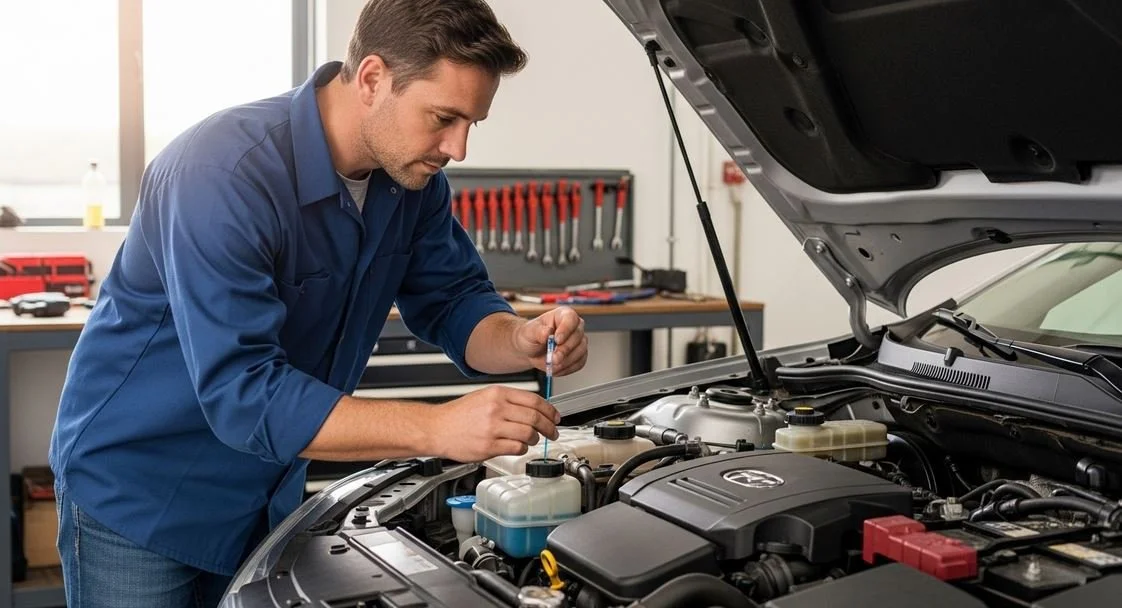
That means leaks, a mushy brake pedal, and possibly total brake failure if left alone.
If you recently had your brakes serviced or topped off at home, it’s worth checking what was used. Even a small amount of the wrong fluid can cause damage over time.
It’s Old Or Degraded
If you haven’t had a brake fluid flush in years, the fluid might just be breaking down.
Over time, brake fluid absorbs moisture from the air. That moisture can cause rust inside the lines and weaken the fluid’s ability to handle heat.
When that happens, it can turn strange colors including green, brown, or even gray.
The color change means the fluid isn’t performing the way it should. Old brake fluid doesn’t transfer pressure as effectively, so your brakes may start to feel spongy or less responsive.
It’s A Specialty Or Dyed Fluid
Once in a while, green fluid isn’t a problem at all.
Some high-performance or European vehicles use colored brake fluids for easier maintenance. For example, some ATE fluids used in racing or specialty applications are blue or green so mechanics can tell when the system’s been completely flushed.
Also Read: Why Is My Radiator Fan So Loud?
If your car is stock and you didn’t specifically ask for a colored brake fluid, though, that’s probably not what’s going on.
Still, you can check your owner’s manual or past service receipts to confirm what was used.
Is Green Brake Fluid Bad?
Yes, green brake fluid is bad most of the time.
Green means something has changed, and change inside the braking system isn’t good news. Contaminated or degraded brake fluid can cause several issues:
Reduced braking power
Soft or unresponsive brake pedal
Damage to rubber seals or ABS components
If you see green brake fluid and you’re not 100% sure it’s a dyed specialty fluid, it’s safest to assume something’s wrong.
The longer it sits in your system, the higher the chance of damage.
What To Do If You Find Green Brake Fluid
So you’ve confirmed your brake fluid looks green - now what? Time to act fast before it turns into a bigger problem. Here’s what to do:
Also Read: Jumper Cables Smoking
#1 Don’t Drive Until You Know What’s In There
If there’s even a chance that the fluid was contaminated, don’t take the car out for a spin.
Driving with compromised brake fluid is risky because it can lead to sudden loss of pressure.
It’s not worth it. Get it checked out first.
#2 Check Your Owner’s Manual
Find out what type of brake fluid your car is supposed to use.
Most vehicles take DOT 3 or DOT 4, but some use DOT 5 or DOT 5.1.
The type matters a lot because these fluids aren’t interchangeable. Each has different boiling points and chemical properties.
Once you know the correct type, you’ll have a better idea of what should be in there—and what shouldn’t.
#3 Flush The Brake System
If the fluid is contaminated or old, the fix is a full brake fluid flush.
That means draining out all the fluid, cleaning the lines, and refilling with fresh, correct brake fluid. This gets rid of the green color and any moisture or debris that’s built up.
If you’re comfortable working on cars, you can do it yourself, but most people prefer to let a shop handle it.
They will test the fluid's moisture content (and sometimes copper content), and will perform a complete brake fluid flush to remove all the old, contaminated fluid from the master cylinder, lines, and calipers.
#4 Check For System Damage
Once the fluid is flushed, have the mechanic inspect the entire brake system.
Since the green color is often caused by internal corrosion, the mechanic should inspect the system for signs of damage to the brake lines, calipers, wheel cylinders, and master cylinder.
If there’s excessive corrosion, you might need to replace components.
But it’s cheaper to fix small issues now than pay for a new braking system down the road.
How To Prevent It From Happening Again
Keeping your brake fluid clean and healthy doesn’t take much effort.
Here are a few small habits go a long way:
Always use the exact fluid type listed in your manual.
Don’t mix brands or types unless they’re clearly compatible.
Store brake fluid in a tightly sealed container to keep moisture out.
Have your brake fluid checked every time you get an oil change.
It’s also a good idea to have your fluid flushed every two to three years, depending on driving conditions. If you drive a lot in stop-and-go traffic or in humid areas, the fluid wears out faster.
Bottom Line
If your brake fluid is green, that’s not normal. It usually means the fluid has been contaminated or it’s old and breaking down. In rare cases, it might be a dyed performance fluid, but unless you know that’s the case, it’s best to assume there’s a problem.
The fix is simple: stop driving, check your manual, flush the system, and make sure there’s no damage.
Brake fluid is super important and keeps you safe on the road, so treating any color change seriously is the smart move. So get it swapped out before it causes bigger trouble.