Burnt Fuse Prongs? (Solved)
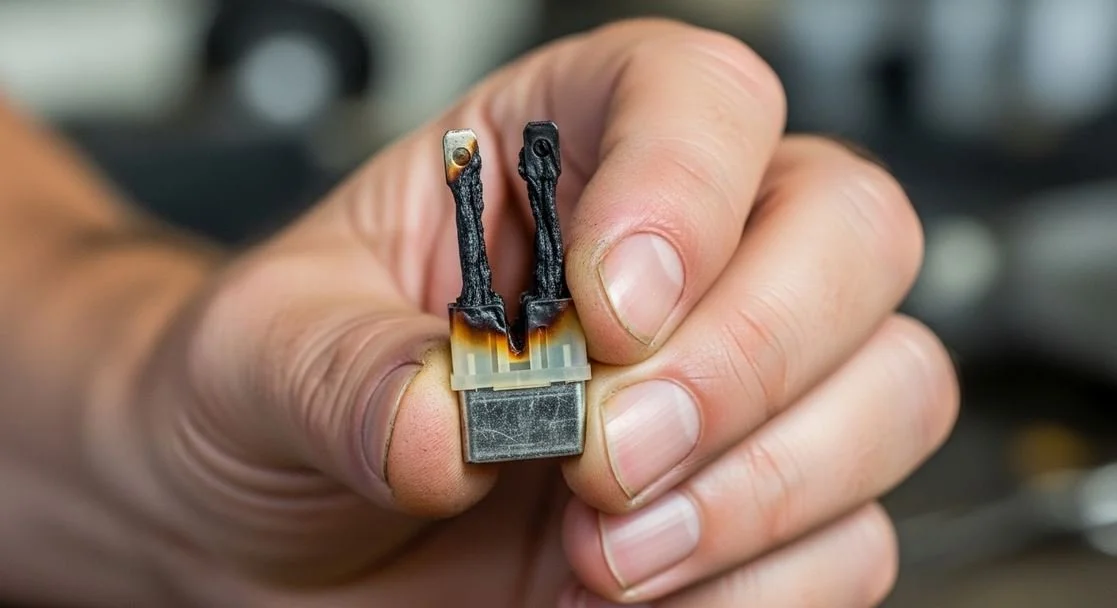
You pop open your fuse box, pull a fuse out, and… yeah. The metal prongs look dark, maybe a little crispy or maybe the plastic looks slightly melted too.
That’s not something you just shrug off and forget about.
Burnt fuse prongs usually mean heat built up at the connection point.
And in a car’s electrical system, heat shows up for a reason - electricity flowing through a loose, dirty, or overloaded connection.
The good news? Most of the time, this is fixable.
In this post, we’ll explain why your fuse prongs burned, and what to do about it.
Why Did Fuse Prongs Burn?
When fuse prongs burn, it usually comes down to resistance or too much current.
Let’s go through the common reasons this happens.
#1 Loose Fuse Connection
This is probably the most common cause of burnt fuse prongs.
A fuse is supposed to fit tightly into its slot, and the metal terminals inside the fuse panel grip the blades of the fuse firmly. If those terminals get worn out, bent, or spread apart, the fuse won’t sit snug anymore.
Now you’ve got a tiny gap. And electricity hates tiny gaps.
Instead of flowing smoothly, the current has to jump micro-gaps between the fuse blade and the terminal. That creates resistance. Resistance creates heat. Heat burns the prongs.
You might even notice the fuse feels loose when you wiggle it. That’s a big clue.
Also Read: Coolant All Over Engine
Older vehicles tend to have this issue more often, especially if fuses have been pulled in and out many times over the years.
#2 High Resistance From Corrosion
Moisture and electrical systems are not friends.
If water or humidity gets into the fuse panel, corrosion can form on the metal terminals. Sometimes it’s obvious like green or white crusty buildup. Other times it’s subtle, just dull-looking metal that doesn’t shine anymore.
Even a thin layer of corrosion increases resistance. The current still flows, but now it’s pushing through a slightly compromised connection.
Over time, that extra resistance turns into heat buildup right at the contact point.
That heat shows up as:
Darkened or blackened fuse blades
Pitted metal on the prongs
Slight melting around the fuse slot
Corrosion-related overheating often happens slowly.
You might not notice anything until the fuse finally looks cooked.
#3 Overloaded Circuit
Sometimes the connection is fine. The real issue is too much electrical demand.
Every fuse is rated for a specific amperage.
That number exists for a reason. If a circuit starts pulling more power than it’s designed for, heat builds up - not just in the wiring, but also at the fuse connection points.
This often happens after adding aftermarket accessories like:
High-powered stereos
Extra lighting
Phone chargers and inverters
Off-road accessories
Even if the fuse hasn’t blown yet, the connection can still overheat. The fuse blades may darken before the fuse actually fails.
And no, putting in a higher-amp fuse is not the solution.
Also Read: Throttle Body Cleaner Alternatives
That just removes the safety limit and can cause bigger problems.
#4 Poor Quality Fuse
Cheap aftermarket fuses sometimes use lower-grade metal that heats up faster.
Some also don’t fit as tightly as OEM-style fuses.
That combination (slightly loose fit plus lower-quality material) can create the perfect setup for burnt prongs.
If you replaced a fuse recently and it burned again quickly, the fuse itself might be the issue. Swapping it for a quality fuse from a reputable brand can make a noticeable difference.
It sounds minor, but small differences in fit and metal composition matter in electrical systems.
#5 Melted Fuse Slot (Bigger Problem)
This is where things get more serious.
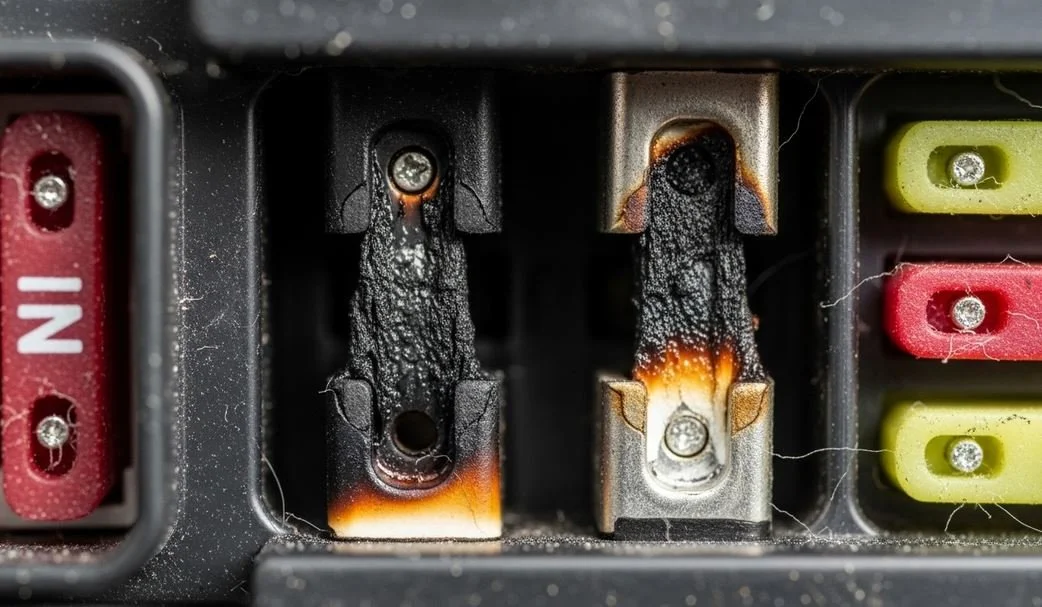
If the plastic inside the fuse panel looks melted, warped, or deformed, the problem has likely been going on for a while. Once the fuse slot itself gets damaged, the terminals may no longer grip tightly - which makes the overheating cycle continue.
At that point, replacing the fuse alone won’t fix it. The fuse block may need repair or replacement. In some vehicles, that can mean replacing the entire fuse panel assembly.
It’s not always cheap, but it’s better than risking wiring damage.
Also Read: Green Brake Fluid
Is Burnt Fuse Prongs Dangerous?
I’m not going to sugarcoat it: yes, it can be.
Any time you have enough heat to melt plastic and discolor metal in your car’s electrical system, you have the potential for a fire.
Cars are full of flammable stuff (insulation, carpets, plastic trim) and a glowing hot fuse is basically a spark waiting for a fuel source.
Beyond the fire risk, it’s also dangerous for your car’s health.
Low voltage caused by a bad, burnt connection can make your car’s computers go haywire, leading to stalling, weird transmission shifts, or even frying expensive sensors.
What To Do About Burnt Fuse Prongs
Start by replacing the fuse with the exact same amperage rating.
Next, inspect the fuse slot carefully. Use a flashlight and look inside. The metal terminals should look straight and clean. If they look spread apart or melted into the plastic, that’s your culprit.
If you see light corrosion, you can gently clean the terminals using an electrical contact cleaner.
Just make sure the car is off and the key is out before you touch anything.
If the fuse feels loose after replacement, that’s a strong sign the terminal tension is weak. In that case, the fuse block may need repair.
And if the same fuse keeps overheating or blowing, the circuit likely has an electrical load issue. That’s when it’s smart to have a technician test the circuit with a multimeter to see how much current it’s actually drawing.
Quick Test You Can Do
Here’s a simple check that doesn’t require fancy tools.
After installing a new fuse, turn the vehicle on and activate whatever system that fuse controls. Let it run for about 10 minutes.
Then shut the vehicle off and carefully remove the fuse.
Touch the prongs. Warm is normal. Hot enough that you immediately pull your hand away? That’s not normal.
You can also visually check for early discoloration. If the blades already look darker after a short period, something is still creating excess heat.
This quick test won’t diagnose everything, but it can confirm if the issue is ongoing.
Bottom Line
Burnt fuse prongs are almost always caused by one of five things: a loose connection, corrosion, too much electrical load, a low-quality fuse, or a damaged fuse slot.
The discoloration happens because resistance creates heat at the contact point.
Replacing the fuse might solve it if the original issue was minor. If the fuse continues overheating, the connection inside the fuse panel or the circuit load needs attention.
Ignoring it can lead to melted fuse blocks or wiring damage.
Fix the root cause, not just the symptom. That’s how you keep your car’s electrical system safe and reliable.