Tire Thump At Low Speeds? (Here's Why)
Ever been driving slowly through a parking lot or down your street and suddenly hear weird thump-thump-thump noises coming from your car?
It's the kind of sound that makes you turn down the radio and grip the wheel a little tighter.
The weird thing? As you pick up speed, it often seems to fade away, almost like it never happened. But at low speeds, it’s loud enough to make you wonder if something is about to fall apart.
In this post, we’ll shed some light on why tires thump at low speeds, and what to do next.
#1 Flat Spots On Tires
Flat spots are one of the most common reasons behind that tire thump at low speeds.
Imagine your tire as a perfect circle that rolls smoothly against the road. Now picture a section of that circle pressed flat.
That’s what happens if your car sits too long in one spot, especially in cold weather.
When you finally drive again, the flat area makes contact with the pavement every rotation, causing a bump or thump sound.
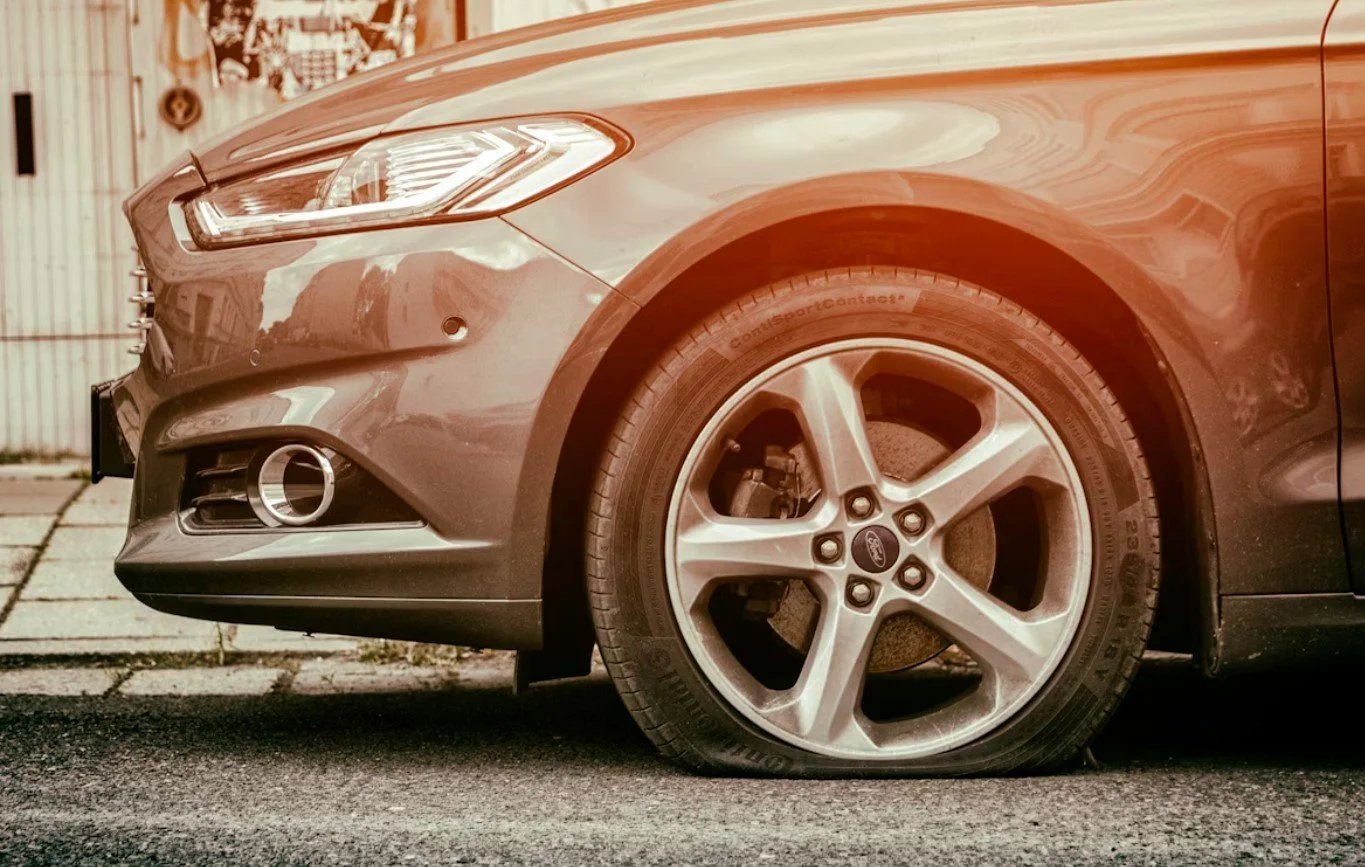
In many cases, the vibration smooths out after a bit of driving as the rubber warms up and regains shape. But if the flat spot is severe or permanent, you’ll keep hearing that thump every time the wheel turns.
Also Read: Ran Over Glass Bottle In Parking Lot
It feels like the car is slightly hopping along the pavement. If you’ve left your car parked for weeks or months, this could very well be the reason.
#2 Tire Defects Or Separation
This is a more serious issue: tire defects.
Sometimes the layers inside a tire start to separate. You may not see it immediately, but you’ll feel it. A separated belt inside the tire creates a bulge on the tread, which then slaps the road each time it rolls around which creates the thumps.
This isn’t one you can just ignore.
A tire with a separation can fail suddenly, and no one wants to deal with a blowout while driving.
If your thump feels heavy and doesn’t go away even after some driving, it might be time to stop guessing and get it checked out. Safety should come first here.
#3 Uneven Tread Wear
Uneven wear is another common reason your tires could be thumping.
If parts of the tread wear down in patches, the tire no longer makes consistent contact with the road. Instead, it hits in spots, making that familiar thump or even a slapping noise.
This usually happens when alignment is off or if suspension parts are getting tired. Sometimes it’s because the tires haven’t been rotated regularly.
You might notice it more on older tires, where one part of the tread looks jagged or scalloped compared to the rest.
To check this, run your hand lightly over the tread and you’ll feel the high and low spots. That uneven surface is exactly what’s causing the sound.
Also Read: How Thick Should Brake Pads Be?
#4 Bent Or Damaged Wheels
Sometimes the tire isn’t the problem, it’s the wheel itself.
Hit a pothole hard enough, and you can bend a rim. Even a small bend will cause the wheel to rotate unevenly, and at slower speeds, you’ll hear it thump.
At higher speeds, the vibration might blend into the background or show up as a wobble in the steering wheel instead.
Bent wheels don’t just make noise; they can also cause uneven tire wear over time.
That means ignoring it only creates a bigger headache (and expense) down the road.
#5 Suspension Or Shock Absorber Issues
Your suspension system is what keeps the ride smooth and comfortable. But if shocks or struts are worn, they don’t absorb bumps like they should.
So instead, the tires bounce, and that bounce creates a thumping sound as the tire loses and regains contact with the pavement.
Think of it as your tire “skipping” across the road. It doesn’t just make noise; it also makes driving less stable, especially around corners or on rough patches.
If your car feels extra bouncy, this could be the reason behind the noise.
Also Read: How Long Will 3mm Brake Pads Last?
#6 Debris Stuck In The Tire Tread
Sometimes the explanation is simple.
You could have a rock, piece of tar, or even gum stuck in the tread. Every time that spot of the tire rotates, it hits the road with a thump.
The good news is that this one’s usually the easiest fix.
Just take a close look at the tire, pull out the debris, and you’re back to smooth rolling. It’s the kind of issue that makes you laugh at how small things can make such a big noise.
What To Do If Your Tires Thump At Low Speeds?
So, you’ve noticed the thump and you’re not sure what’s next.
First off, don’t panic. Not every thump means you’re on the verge of disaster. Some problems are quick fixes, while others need professional eyes. Here’s a simple way to tackle it:
Inspect the tires for visible bulges, flat spots, or debris.
Run your hand across the tread to feel for uneven wear.
Check the rims for dents or bends.
Make sure your tire pressure is correct.
If everything looks fine but the sound sticks around, it’s smart to rotate the tires.
Sometimes moving them around shifts the problem and gives you a clue about what’s really happening.
When To See A Mechanic
There’s a line between what you can handle in the driveway and what should be left to a pro.
If you notice bulging on the tire, if the tread looks chewed up in spots, or if the car feels unstable, that’s mechanic territory.
A pro can spot things like internal tire separation or hidden suspension issues you can’t see from the outside. They also have the right tools to balance and align the wheels properly.
So don’t wait too long if the thump keeps happening - it’s better to catch a problem early than to let it cause bigger damage or safety issues.
Bottom Line
A tire thump at low speeds can range from harmless to serious.
Sometimes it’s just a flat spot from sitting too long, or a little rock jammed in the tread. Other times it’s a bent rim, worn suspension, or a tire that’s on its last legs.
So you need to pay attention.
If the noise fades quickly and inspection shows nothing obvious, you’re probably fine for now. But if it lingers, feels heavier, or makes the car handle oddly, it’s time to get it checked out.
At the end of the day, tires are what connect you to the road. Keeping them in good shape keeps you safe, comfortable, and worry-free.